

To meet its climate and energy ambitions, Europe must do more than generate clean electricity. It must also be able to move that electricity efficiently across borders. A stronger, more interconnected European power system is essential to improving security of supply, easing congestion and integrating rising volumes of renewable energy into the market. That is why the European Union has set a target of at least 15% electricity interconnection by 2030, encouraging Member States to connect a greater share of their installed generation capacity to neighbouring systems. [1]
At the same time, Europe’s electricity networks are entering a period of unprecedented expansion and renewal. Expanding and modernising transmission and distribution grids is expected to require investment on the order of EUR 1.2 trillion by 2040 [2]. The energy transition therefore depends not only on the pace of renewable deployment, but also on the physical infrastructure that makes electrification and decarbonisation possible.
This is not simply an energy policy challenge; it is also an industrial one. Delivering Europe’s interconnection ambitions will require resilient supply chains for the materials and components on which grid infrastructure depends.
The physical foundations of interconnection
Europe’s interconnected electricity system rests on a vast network of high-voltage infrastructure: overhead transmission lines, underground cables, submarine interconnectors, substations, converters and transformers. These assets must perform reliably over decades, often in demanding environmental conditions and under growing operational stress.
Grid expansion is highly material intensive. Overhead lines, underground and submarine cables, as well as transformers all require substantial volumes of concrete, specialty steel, copper, aluminium, polymers, lead, insulating oils and other industrial inputs. As Europe extends and upgrades its power networks, demand for these materials will rise sharply.
The rising demand places additional pressure on supply chains that are already stretched by ageing infrastructure. A significant share of Europe’s network will require refurbishment or replacement in the coming decades [3], even as electrification and renewable deployment increase the urgency of new grid development. The result is a more complex supply environment, characterised by longer lead times, higher costs and greater exposure to external dependencies.
In many cases, permitting and equipment bottlenecks are more acute short-term obstacles than material availability alone. But that does not make material security any less important. On the contrary, as Europe works to overcome administrative and manufacturing constraints, access to reliable and resilient material supply chains will become even more central to the success of grid build-out.
The role of lead in cable sheathing
Among the infrastructure assets required for deeper interconnection, underground and submarine cables are becoming increasingly strategic. They are essential not only for cross-border links between national electricity systems, but also for connecting offshore renewable generation and strengthening the resilience of the wider grid.
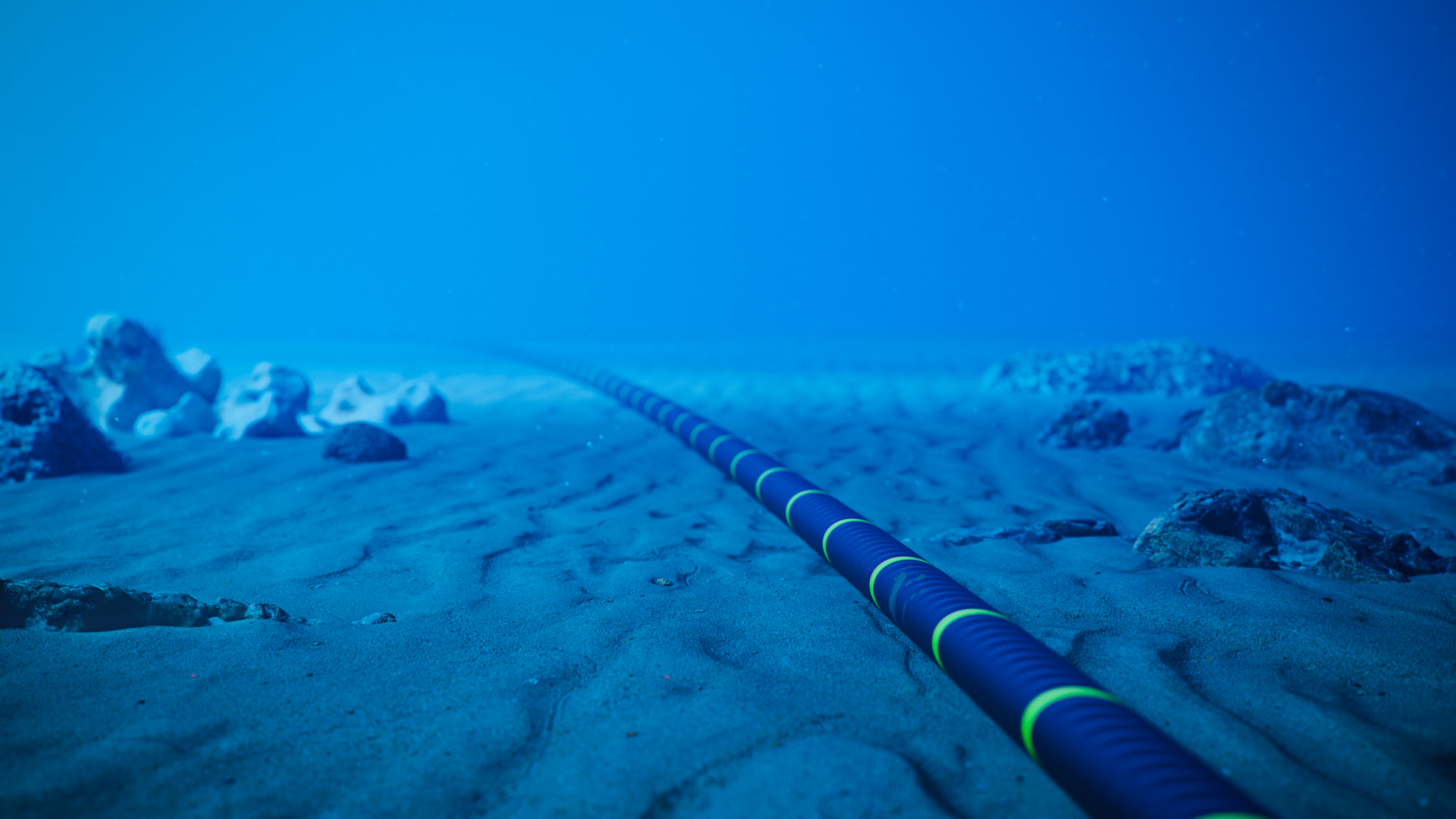
While the core structure of land and submarine cables is broadly similar, subsea applications place particularly demanding requirements on materials and design. In these environments, the metallic sheath surrounding the insulation plays a critical protective role. It must help prevent water ingress, resist corrosion and preserve the integrity of the cable over long operating lifetimes in harsh conditions.
In such applications, lead and lead alloys are an established sheathing solution. Internal lead sheathing provides an effective moisture barrier for underground and submarine cables, helping to protect system performance and extend asset life.
Demand for lead in these applications is expected to increase significantly. In particular, demand associated with DC submarine cables is projected to rise by a factor of ten, from 6.6 kilotonnes in 2025 to 68 kilotonnes in 2030 [4]. Lead’s continued use in cable sheathing reflects the technical demands of these sealed infrastructure systems.
A supply chain advantage Europe already has
From the perspective of strategic autonomy, lead presents a distinctive case among industrial materials. Unlike many inputs required for the energy transition, lead benefits from a highly circular and relatively Europe-centred supply chain.
Lead is the EU’s most recycled metal. More than 75% of Europe’s lead comes from recycled sources [5]. This degree of circularity is a significant strategic advantage at a time when the EU is seeking to reduce external dependencies and strengthen domestic industrial resilience.
The European lead supply base is also notable for its high level of internal retention. On average, 94% [6] of the EU’s lead is retained for use by EU industry, and in 2024 that figure exceeded 95%[7]. Import reliance remains low: in 2024, less than 4.5% of the EU’s lead supply was imported. In the same year, the EU produced 1.37 million tonnes of lead, while total exports from the EU-27 amounted to 119,743 tonnes, or approximately 9% of production volume. [8]
These figures matter because they point to a material stream in which Europe retains a comparatively strong degree of control. In contrast to other parts of the energy transition value chain, where dependence on third-country suppliers is a growing concern, lead contributes to the EU’s raw material security and helps reduce exposure to external supply risk. That is especially relevant in strategic infrastructure sectors such as cable manufacturing, where long lead times and limited supplier capacity already create vulnerabilities.
Maintaining this advantage should form part of the EU’s broader strategic autonomy agenda. At a time when policymakers are rightly focused on securing access to critical raw materials, supporting a material stream that is already circular, largely domestic and industrially available within Europe is a practical and rational choice.
Conclusion: Interconnected and independent
Europe’s energy future depends on achieving a dual objective. It must become more deeply interconnected, so electricity can flow across borders wherever it is needed. And it must become more materially independent, so the infrastructure behind that interconnection is not undermined by fragile external dependencies.
Lead sits at the intersection of these two ambitions. In certain cable applications, it enhances durability and reliability. In supply-chain terms, it represents a comparatively circular and European-controlled material stream. Its well-established and highly circular European supply chain is also a relevant asset as grid investment gathers pace.
As Europe continues to expand and modernise its electricity networks, maintaining access to materials that can support reliable infrastructure will remain critical.
References
[1] Regulation (EU) 2018/1999 of the European Parliament and of the Council of 11 December 2018 on the Governance of the Energy Union and Climate Action: https://eur-lex.europa.eu/eli/reg/2018/1999/oj/eng
[2] European Commission, Communication on European Grids Package, 10 December 2025: https://www.europarl.europa.eu/RegData/docs_autres_institutions/commission_europeenne/com/2025/1005/COM_COM(2025)1005_EN.pdf
[3] Ibid.
[4] European Commission Joint Research Centre, Material requirements for electricity grids, 10 March 2025: https://publications.jrc.ec.europa.eu/repository/handle/JRC143190
[5] International Lead and Zinc Study Group, 2020
[6] SCRREEN2, Factsheets based on the EU Factsheets 2020, 2023: https://scrreen.eu/
[7] International Lead and Zinc Study Group, 2024
[8] International Lead and Zinc Study Group, data for 2024, Tonnes of refined lead metal (HS codes 780110 + 780191)